Spreadsheet vs CRM for trades: when to make the switch
Is a spreadsheet good enough to track contractor leads? The honest threshold, plus signs it's time to upgrade.
Every contractor starts with a spreadsheet. Some never leave it. Some switch too early and waste a Saturday configuring HubSpot. Here's the honest comparison of spreadsheet vs CRM for trades — with the exact signs it's time to make the move.
Is a spreadsheet good enough to track contractor leads?
Yes — for a while. A contractor spreadsheet with 4 columns (name, phone, project, status) handles your first 10 open quotes just fine. Free, fast, no setup. If your business is below that volume, don't overthink it.
The problem is what happens at quote #15 — you forget to update one row, then five, then you stop opening the file. 90% of contractors who run lead tracking in a spreadsheet abandon it within a month of crossing 15 open quotes.
Tracking leads without software — what works
If you want to skip software entirely, the minimum viable system is:
✅ A single notebook or spreadsheet with name, phone, project, source, next-action date ✅ A 15-minute morning ritual to check overdue follow-ups ✅ Templates for your 4-touch follow-up cadence (text, email, call scripts) ✅ A consistent rule: every new lead gets a row within 1 hour
Done well, this beats a CRM you never open. Done poorly, it loses you 30-50% of winnable bids.
When should a contractor stop using spreadsheets and get a CRM?
The 5 honest triggers:
1. You hit 10+ open quotes at once. Manual tracking starts breaking. You'll forget to follow up on at least one.
2. You have help. The moment a spouse, partner, or admin is involved, a shared CRM beats a shared spreadsheet by a mile.
3. You run 3+ lead sources. Google, Facebook, referrals, web form — tracking which source drives revenue in a spreadsheet is painful.
4. You realize you forgot to follow up. If you ever discover a quote went 2+ weeks without contact, that's the moment.
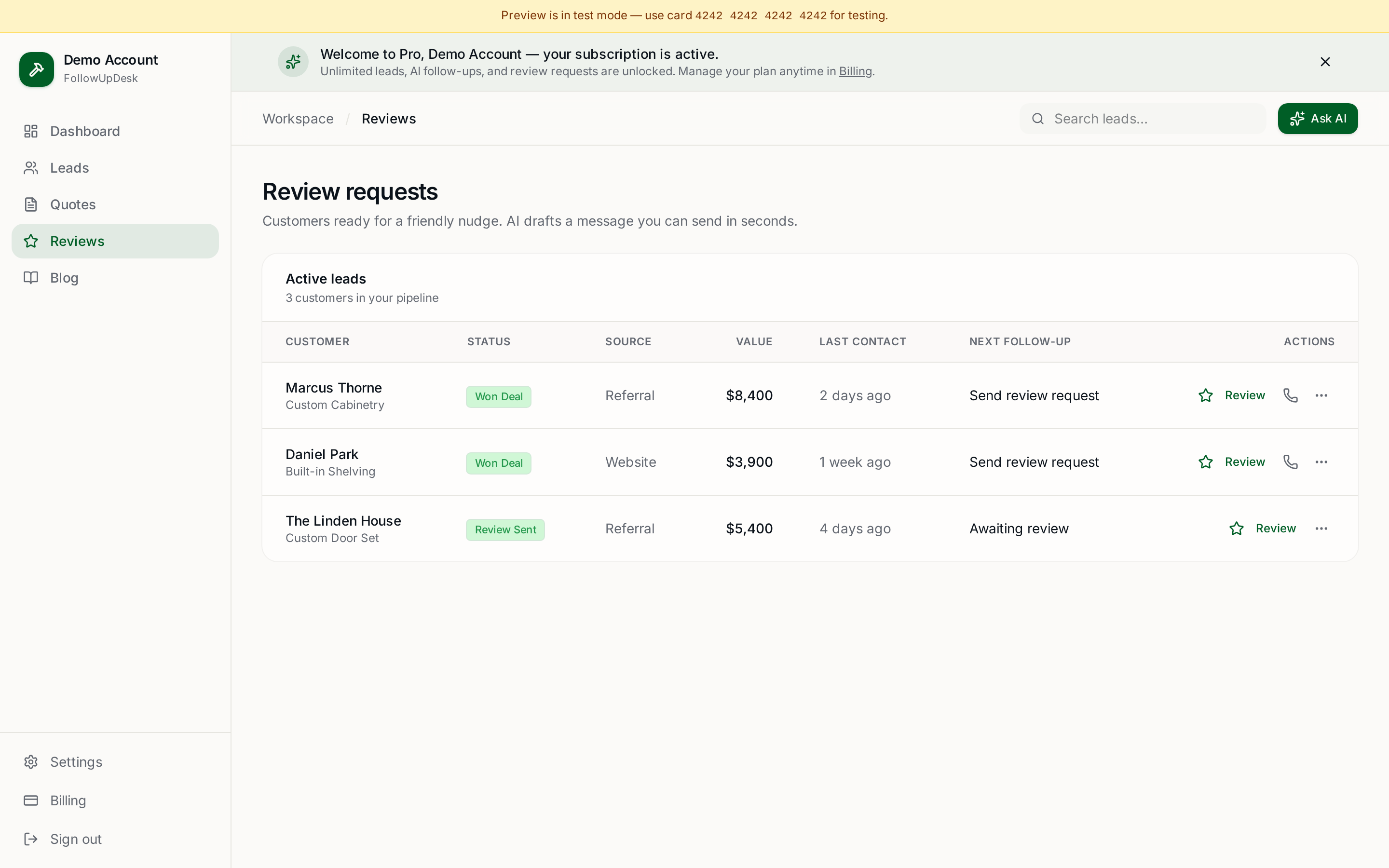
5. You want to ask for reviews systematically. A contractor spreadsheet can't auto-text a Google review link the day after install. A CRM can.
If any 2 of those are true, you're past the switching point.
Spreadsheet vs CRM trades comparison
Spreadsheet wins on: $0 cost, total flexibility, zero learning curve.
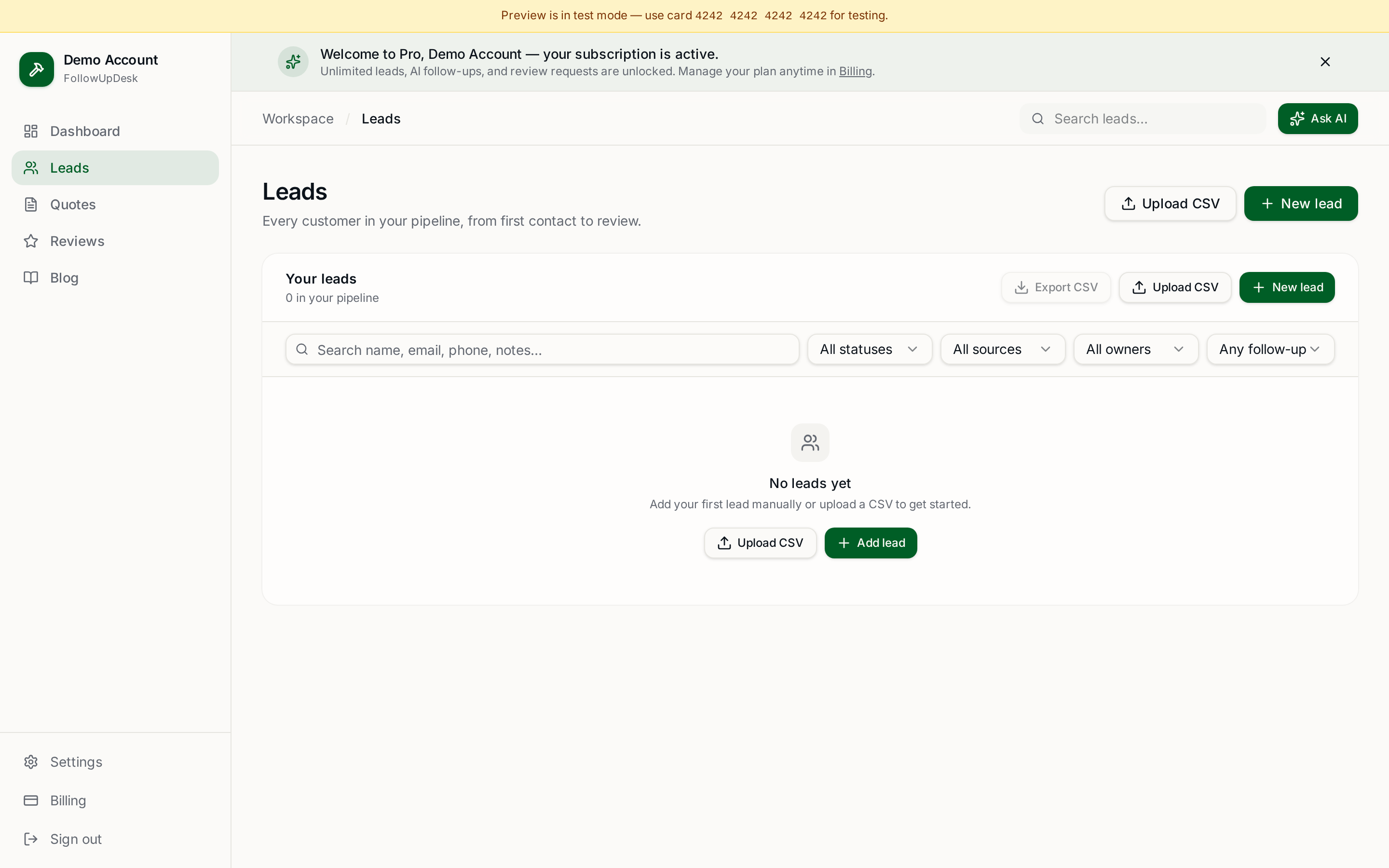
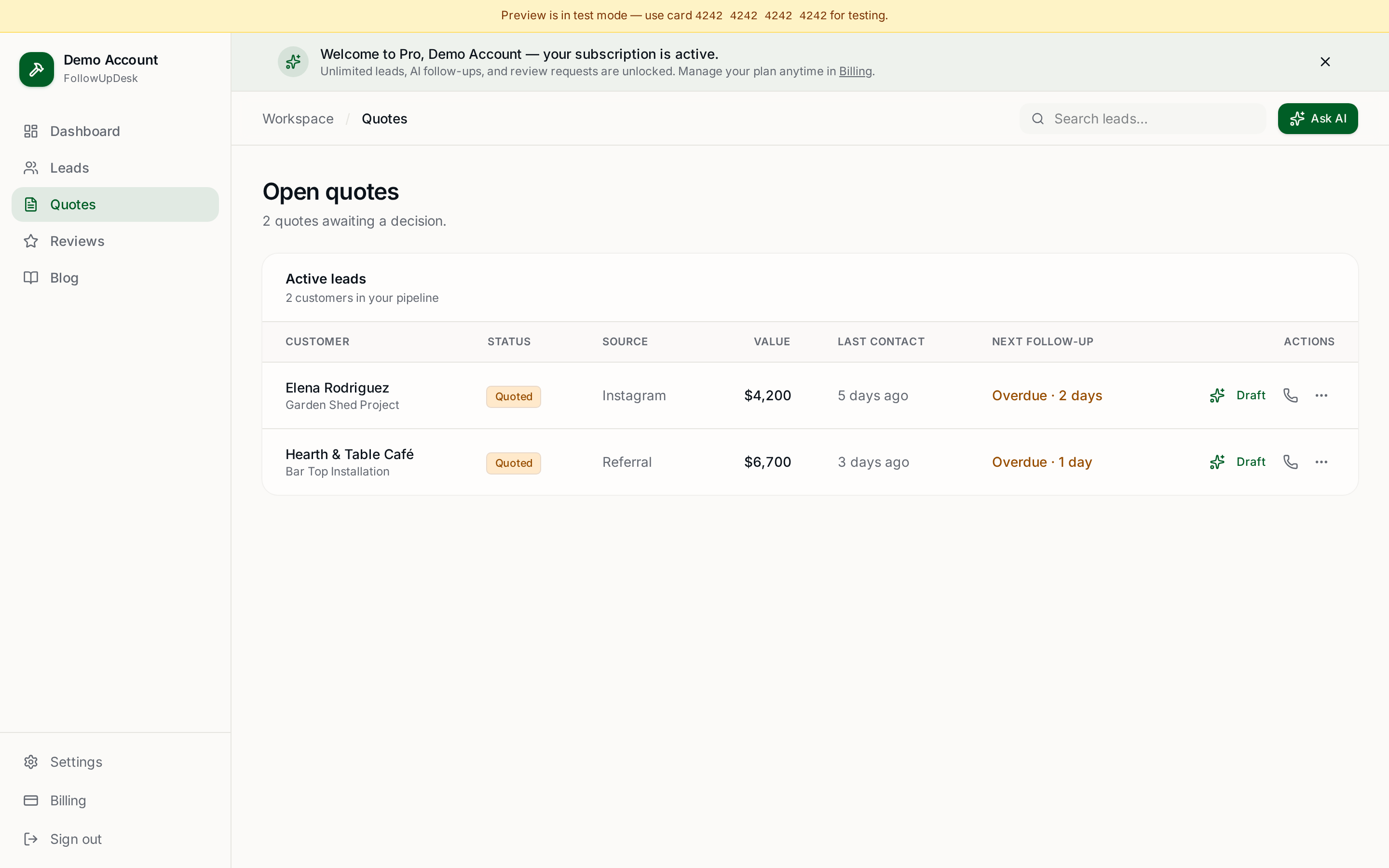
CRM wins on: automatic follow-up, mobile access, overdue alerts, review automation, customer history, lead-source analytics, won/lost reporting.
It's a wash on: initial setup time (both ~30 minutes for the basics).
Why most contractor spreadsheet leads systems fail
Spreadsheets don't remind you. They don't text the customer. They don't surface overdue follow-ups every morning. They just sit there, slowly drifting from reality, until one day you stop trusting them and stop opening them.
A CRM's actual job isn't storing data — it's reminding you to do the next thing. That single feature is why CRM-using contractors close 30%+ of bids and spreadsheet-using contractors close ~18%.
The honest recommendation
1-3 open quotes a week: use a notebook. Truly. 5-10 open quotes: spreadsheet is fine. 10+ open quotes or any help on the team: get FollowUpDesk — $29/month, set up in 10 minutes, mobile-first.
Related: do contractors really need a CRM? · vs spreadsheet · contractor lead pipeline · open quote tracking.
See it in FollowUpDesk
Get started — $29/mo →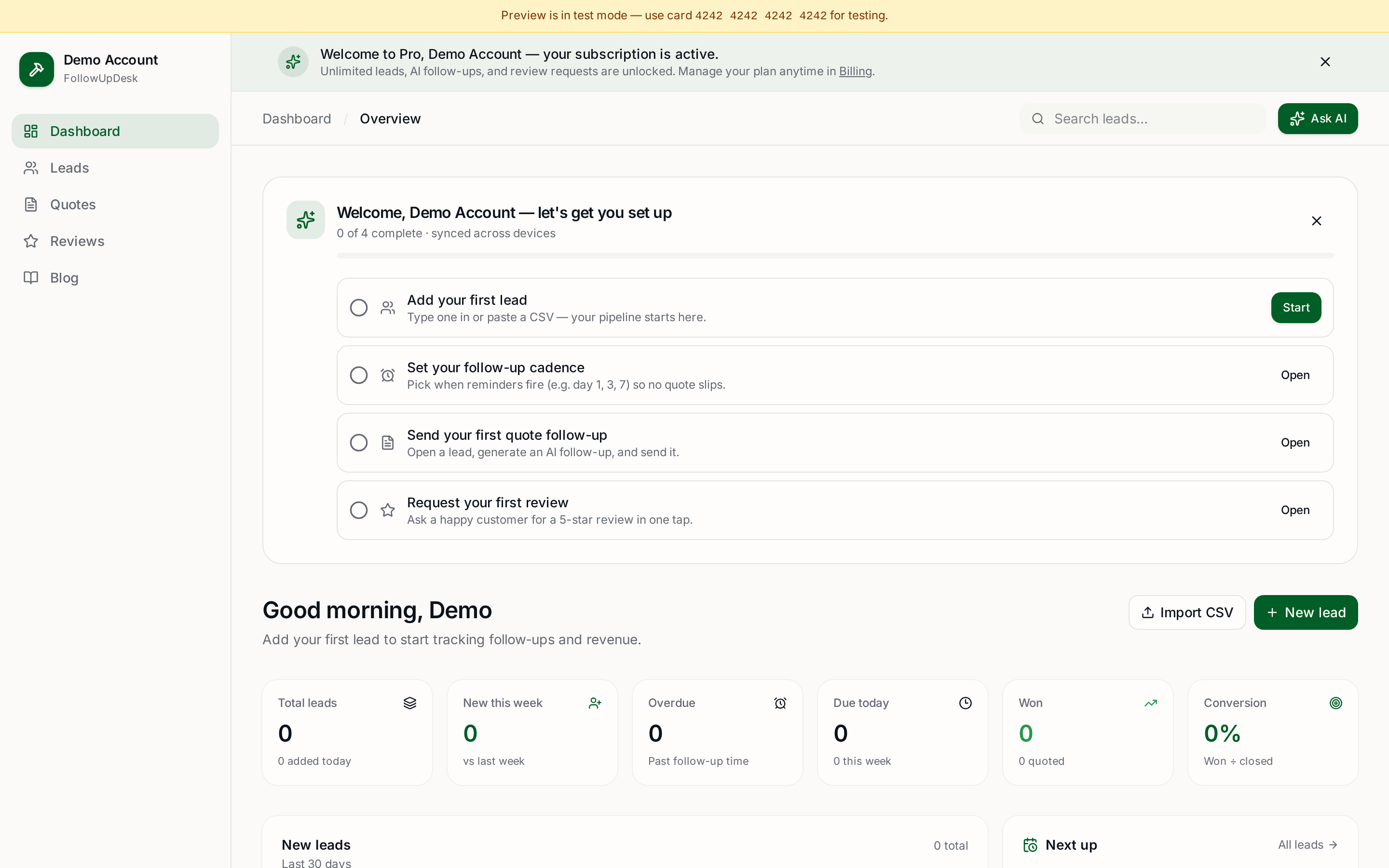
Skip the manual work — these are free, no card required
Frequently asked questions
Is a spreadsheet good enough to track contractor leads?▾
Yes — up to about 10 open quotes at a time. Past that, manual tracking starts dropping bids. Most contractors cross the threshold within 6 months of consistent marketing.
When should a contractor stop using spreadsheets and get a CRM?▾
When you hit 10+ open quotes at once, when anyone else is helping with leads, when you run 3+ lead sources, or the first time you discover a quote went 2+ weeks without follow-up. Any 2 of those = time to switch.
What's the difference between a contractor spreadsheet and a CRM?▾
A spreadsheet stores data. A CRM reminds you to act on it — surfacing overdue follow-ups, running the 4-touch cadence automatically, and triggering review requests after every job. That reminder loop is the entire reason CRMs lift close rates.
Can I track leads without software?▾
Yes, with a notebook or spreadsheet and a 15-minute morning ritual. Works fine under 10 open quotes. Past that, manual tracking misses bids — and one missed $5,000 job costs more than a year of CRM software.
Get the full FollowUpDesk CRM — $29/month
One pipeline for every lead, AI follow-ups for every quote, review requests on autopilot. Cancel in one click.
Free tools require no card · Pro is $29/month, cancel anytime