Contractor lead pipeline: how to set up a simple sales pipeline for trades
What a lead pipeline looks like for a small trade business — with the exact 5 stages, daily ritual, and tools that fit how contractors actually work.
Most contractors don't have a sales pipeline. They have an inbox, a notepad, and a vague memory of who they quoted last week. Setting up a lead pipeline for trades is the single biggest close-rate upgrade a small business can make — and it takes about 30 minutes.
Here's exactly what a contractor lead pipeline looks like, how to set one up, and the daily ritual that turns it into more booked jobs.
What does a lead pipeline look like for a small trade business?
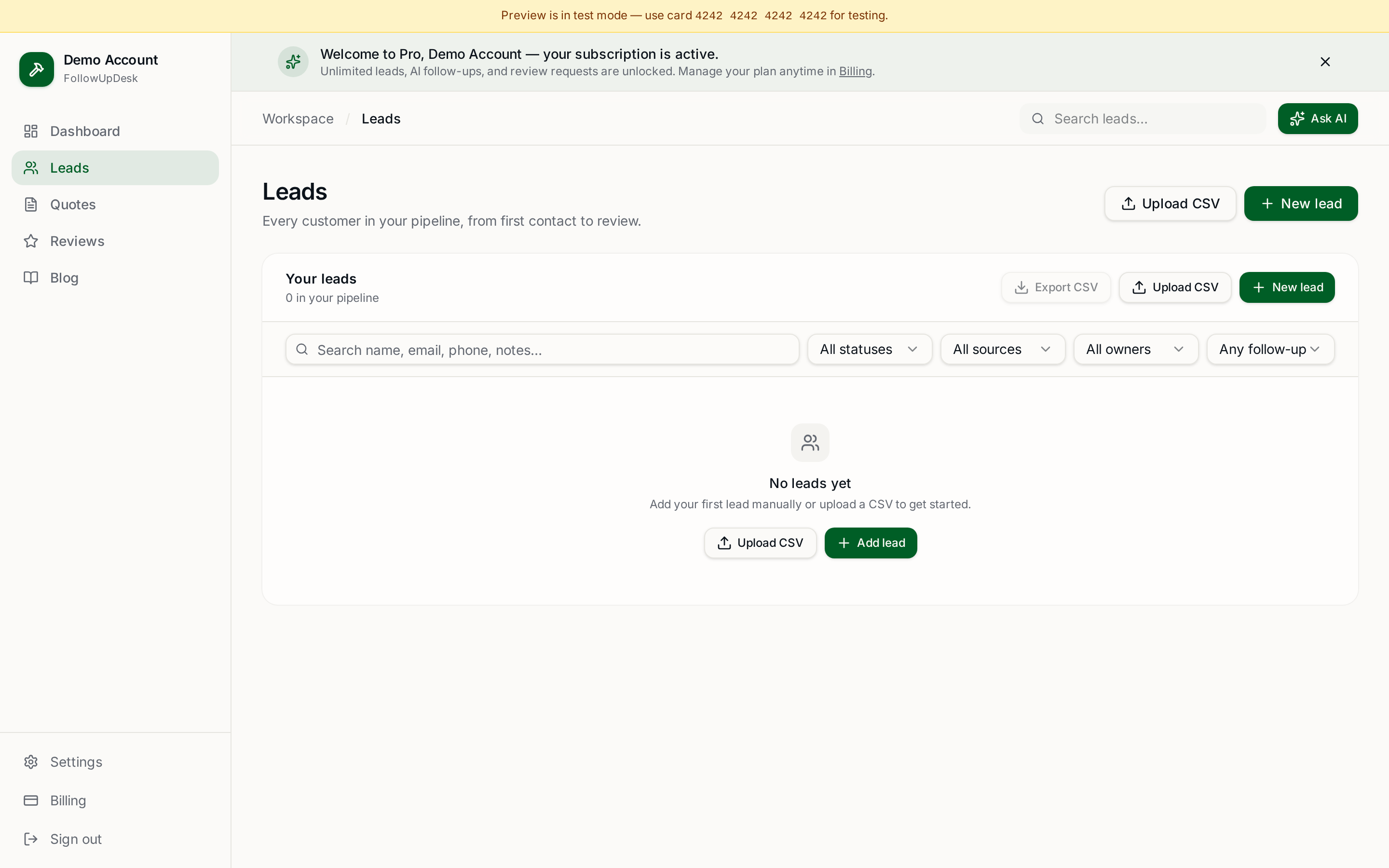
Five stages. That's it. Anything more is overkill for a small crew.
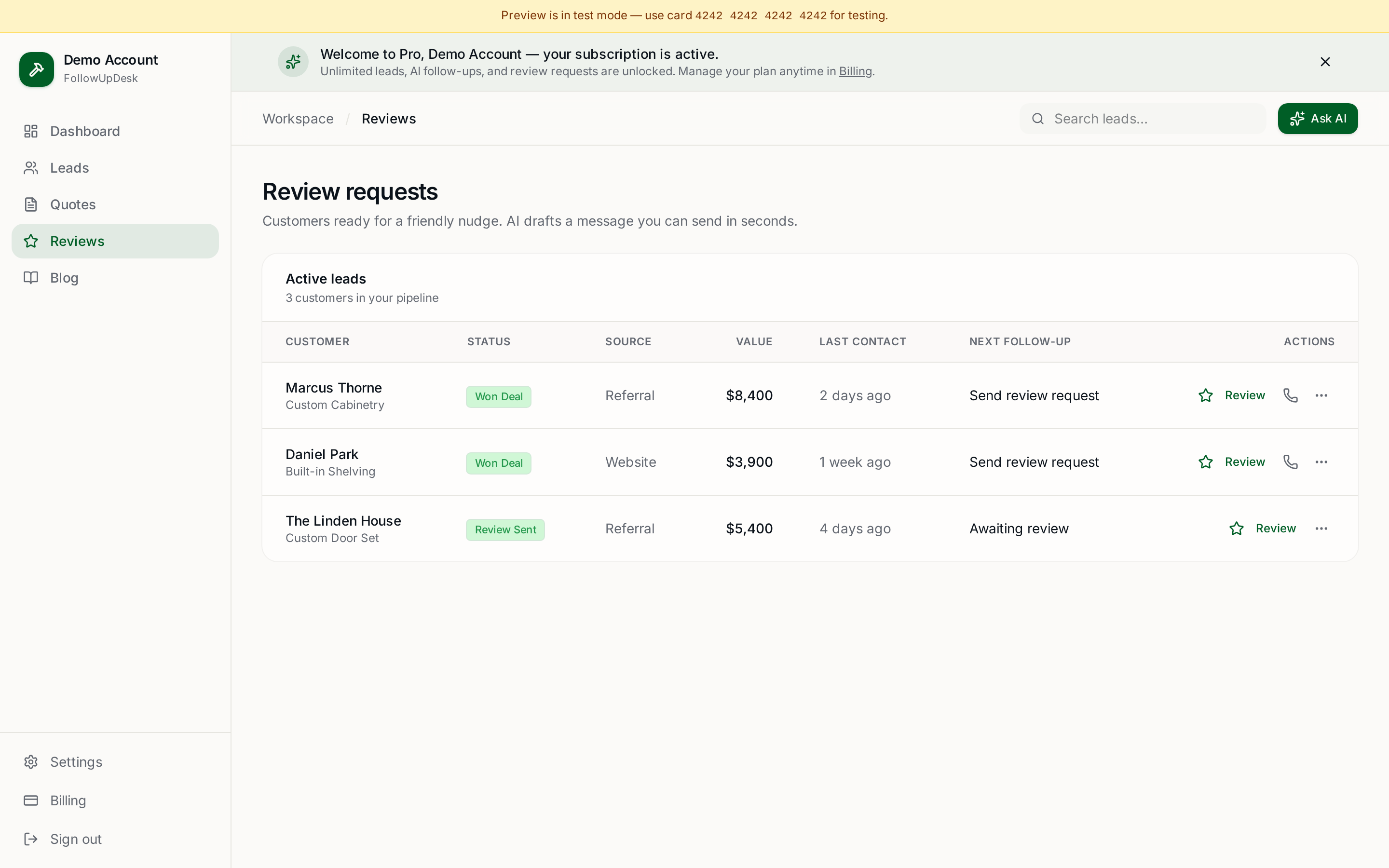
1. New Lead — Just came in. Phone call, web form, referral text. 2. Contacted — You've replied or had a conversation. 3. Quoted — Estimate sent. 4. Follow-up Due — Quote out for 3+ days with no answer. 5. Won / Lost — Closed one way or the other.
Every lead lives in exactly one stage. Move it forward as things happen. That's the whole pipeline.
How do I set up a simple sales pipeline for my contracting business?
Step 1 — Pick one place for everything. Spreadsheet, Trello, or a contractor CRM like FollowUpDesk. Doesn't matter as long as every lead from every source lands there within an hour.
Step 2 — Create the 5 columns above.
Step 3 — For each lead, capture 4 fields: name, phone, project, source. Skip everything else — you can add later.
Step 4 — Set a 'next action due' date for every lead in the pipeline. No lead sits without a next action.
Step 5 — Build a daily ritual: 15 minutes every morning, check anything past its next-action date. Call, text, or email. Move it forward.
That's it. That's the contractor lead pipeline that closes 30%+ of bids.
Home service lead tracking — what to log
Don't over-engineer. Track:
✅ Lead source (Google, Facebook, referral, repeat customer) ✅ Date received ✅ Date of last touch ✅ Date of next action ✅ Estimate value (rough is fine) ✅ Won / Lost reason
After 90 days of clean data, you'll see exactly which source brings the most jobs, which months close best, and which projects you should stop quoting because they never convert. That's the real ROI of home service lead tracking.
Lead management for tradespeople — the 3 rules
Rule 1: Respond in under 15 minutes. The first contractor to reply wins ~50% of the time. Set up auto-replies on every lead source.
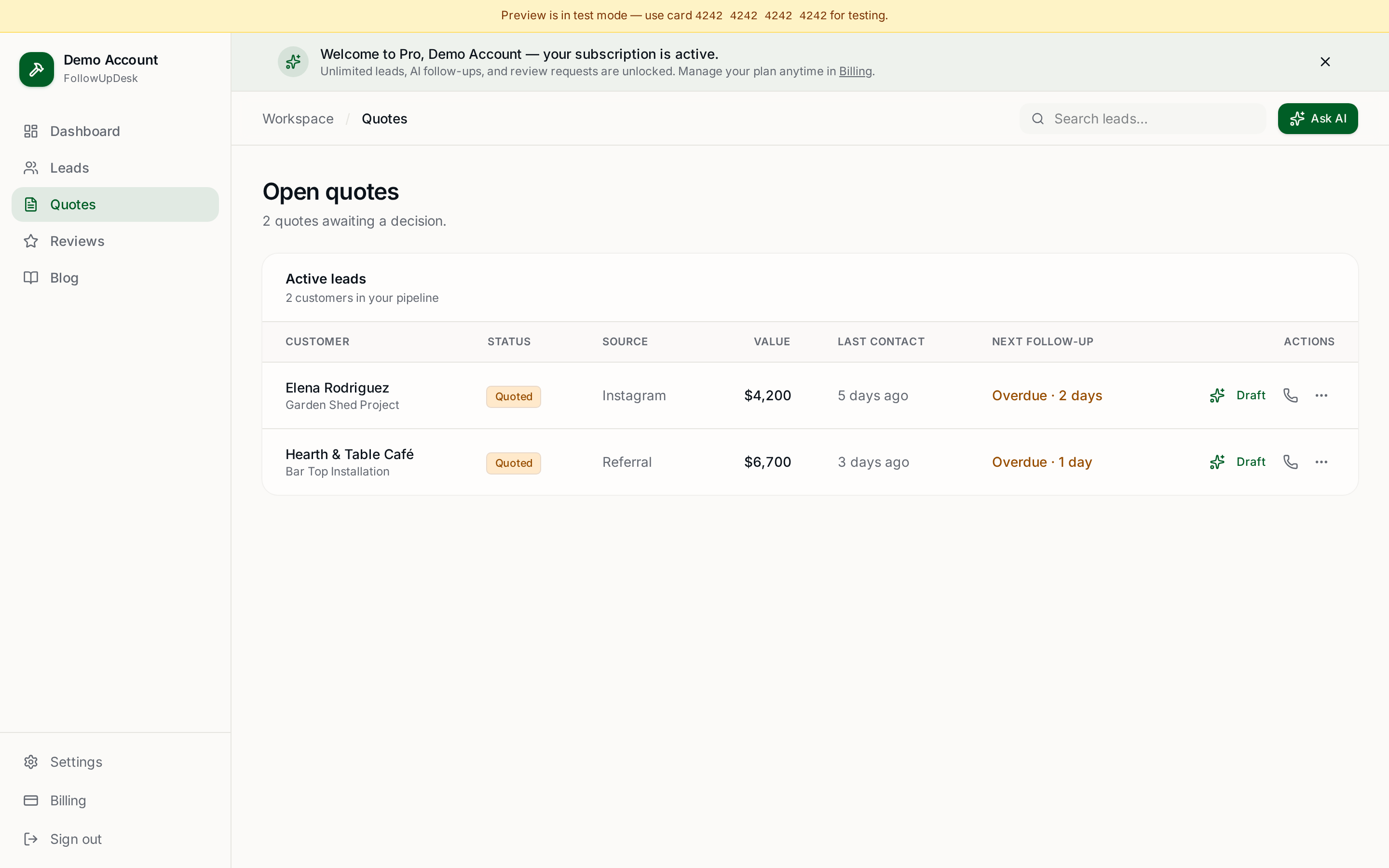
Rule 2: Every quote gets a 4-touch follow-up cadence. Day 3, 7, 14, 30. Read the full follow-up after estimate guide.
Rule 3: Never let a lead sit without a next action. A lead with no next action is a lead about to be lost.
Why spreadsheets fail for trades
Spreadsheets are great until you hit 10 open quotes. Then you forget to update one, then five, then you give up. 90% of contractors who start a lead pipeline in a spreadsheet abandon it within a month.
A purpose-built tool fixes that by automating the boring parts — surfacing overdue follow-ups every morning, sending the cadence for you, and logging every touch automatically.
Set yours up in 10 minutes
FollowUpDesk is the lead management tool for tradespeople we built specifically for this. 5-stage pipeline, automated follow-up, overdue alerts. $29/month, cancel anytime.
Related: open quote tracking · lead tracking for contractors · contractor follow-up software.
See it in FollowUpDesk
Get started — $29/mo →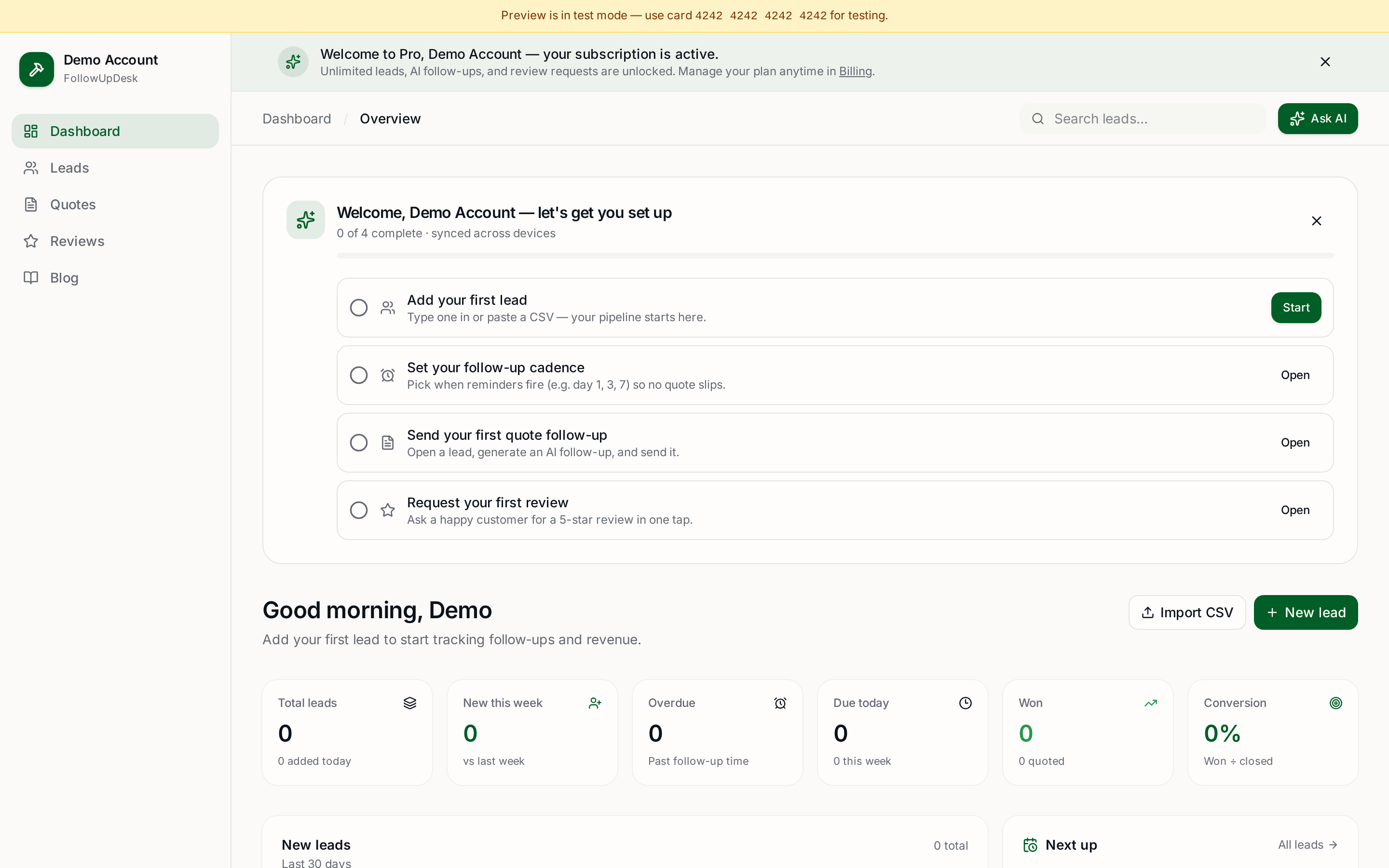
Skip the manual work — these are free, no card required
Frequently asked questions
How do I set up a simple sales pipeline for my contracting business?▾
Five stages — New Lead, Contacted, Quoted, Follow-up Due, Won/Lost — with every lead carrying a 'next action due' date. Check the past-due list every morning. That's the entire system.
What does a lead pipeline look like for a small trade business?▾
A simple 5-stage list, not a complicated funnel. Each lead has 4 fields (name, phone, project, source) and one next action. Most trade businesses overengineer this and abandon it; the simpler the pipeline, the more likely you'll actually use it.
What's the best lead management for tradespeople?▾
A contractor-specific tool that respects how trades actually work — mobile-first, auto follow-up, overdue alerts. Generic CRMs like HubSpot are built for SaaS sales teams and get abandoned by trade businesses within weeks.
How is home service lead tracking different from a regular CRM?▾
Home service lead tracking handles seasonal lead bursts, mobile quoting, and post-job review requests. Regular CRMs assume long sales cycles, multiple stakeholders, and desk-based reps — none of which match a small trade business.
Get the full FollowUpDesk CRM — $29/month
One pipeline for every lead, AI follow-ups for every quote, review requests on autopilot. Cancel in one click.
Free tools require no card · Pro is $29/month, cancel anytime