HVAC maintenance agreement template (and how to sell more of them)
A free HVAC maintenance agreement template covering visits, pricing, and renewal — plus the follow-up system that keeps plans from lapsing.
Maintenance agreements are the closest thing an HVAC contractor has to recurring revenue. They smooth out the shoulder seasons, create replacement leads years in advance, and make the business worth more if you ever sell it.
The HVAC maintenance agreement template
Parties and property: customer name, service address, equipment make, model, serial, and install year for each unit covered.
Term: 12 months from signature, with auto-renewal language and a 30-day cancellation clause.
Included visits: typically two — a spring cooling tune-up and a fall heating tune-up. Spell out the checklist for each (coil cleaning, refrigerant check, capacitor test, flame sensor, drain flush, filter change, safety inspection).
Member benefits: priority scheduling, a stated discount on repairs (commonly 10-15%), no overtime fee on after-hours calls, and a credit toward system replacement.
Pricing: monthly or annual, per system, with the second-system rate stated.
Exclusions: parts, refrigerant beyond a stated amount, duct cleaning, and equipment replacement.
Renewal and payment: auto-charge on file, renewal notice timing, and how to cancel.
Pricing that actually sells
Monthly billing outperforms annual for residential — a plan priced per month reads as a small commitment, and the card on file makes renewal automatic.
Price the second unit lower. Multi-system homes are your best margin.
Bundle the diagnostic fee waiver in. It removes hesitation on the first repair call and drives loyalty.
Where most plans are lost: the renewal
Contractors sell plans well and renew them badly. Cards expire, reminder emails go to spam, and the fall tune-up never gets scheduled — so the customer concludes the plan did nothing.
Build a schedule: a booking reminder 30 days before each seasonal window, a renewal notice 45 days before term end, and a card-expiry alert. Those three touches keep retention high.
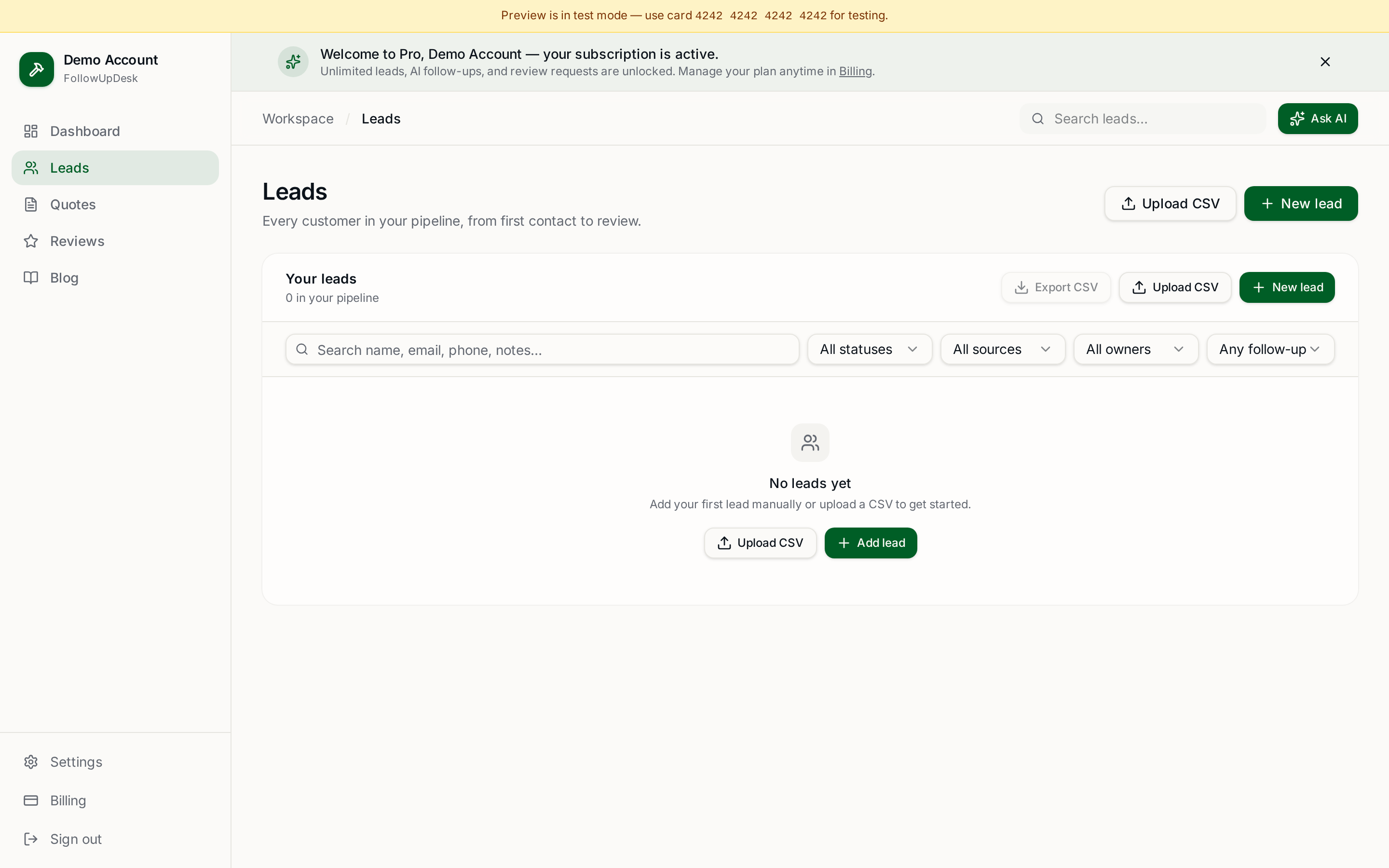
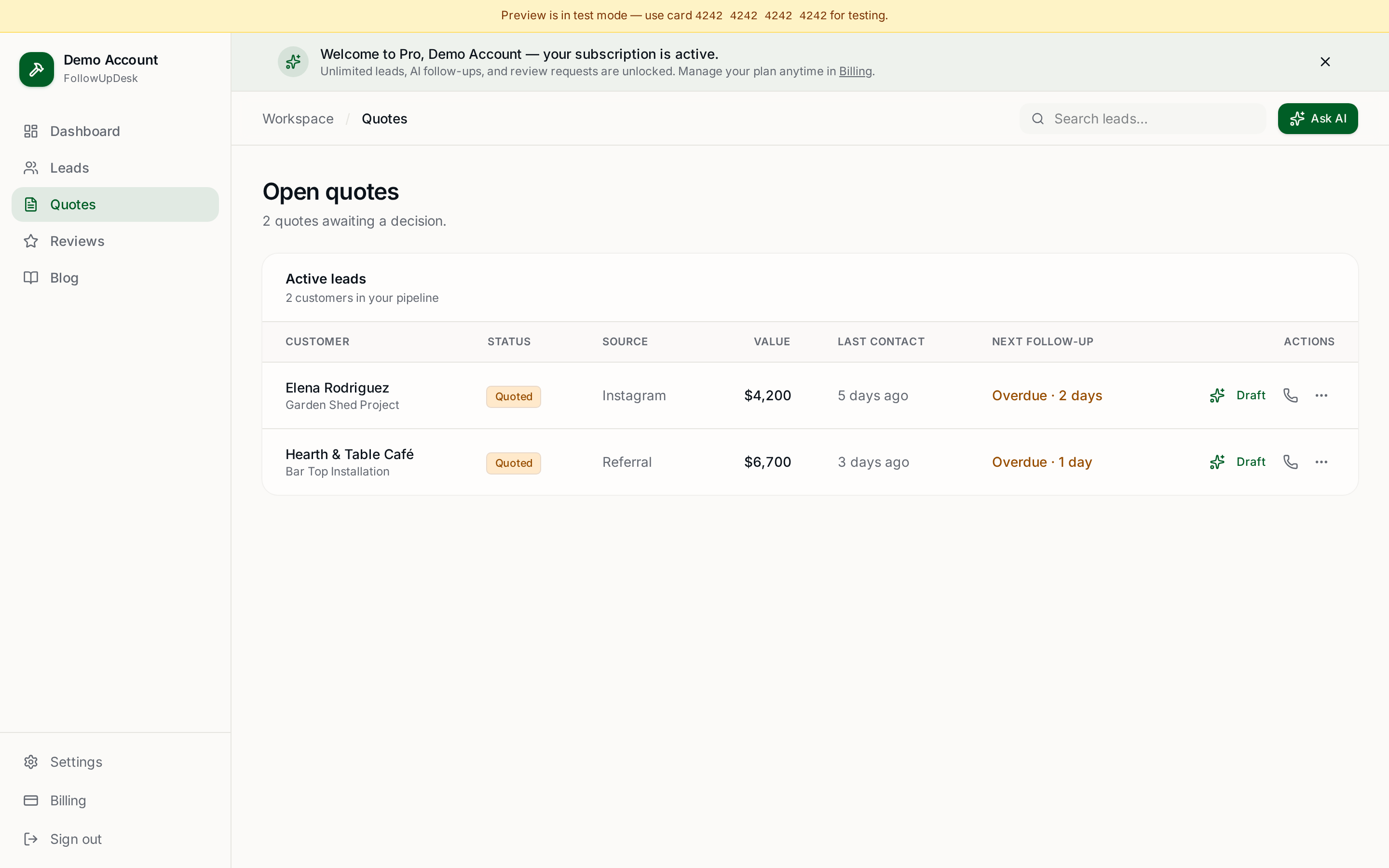
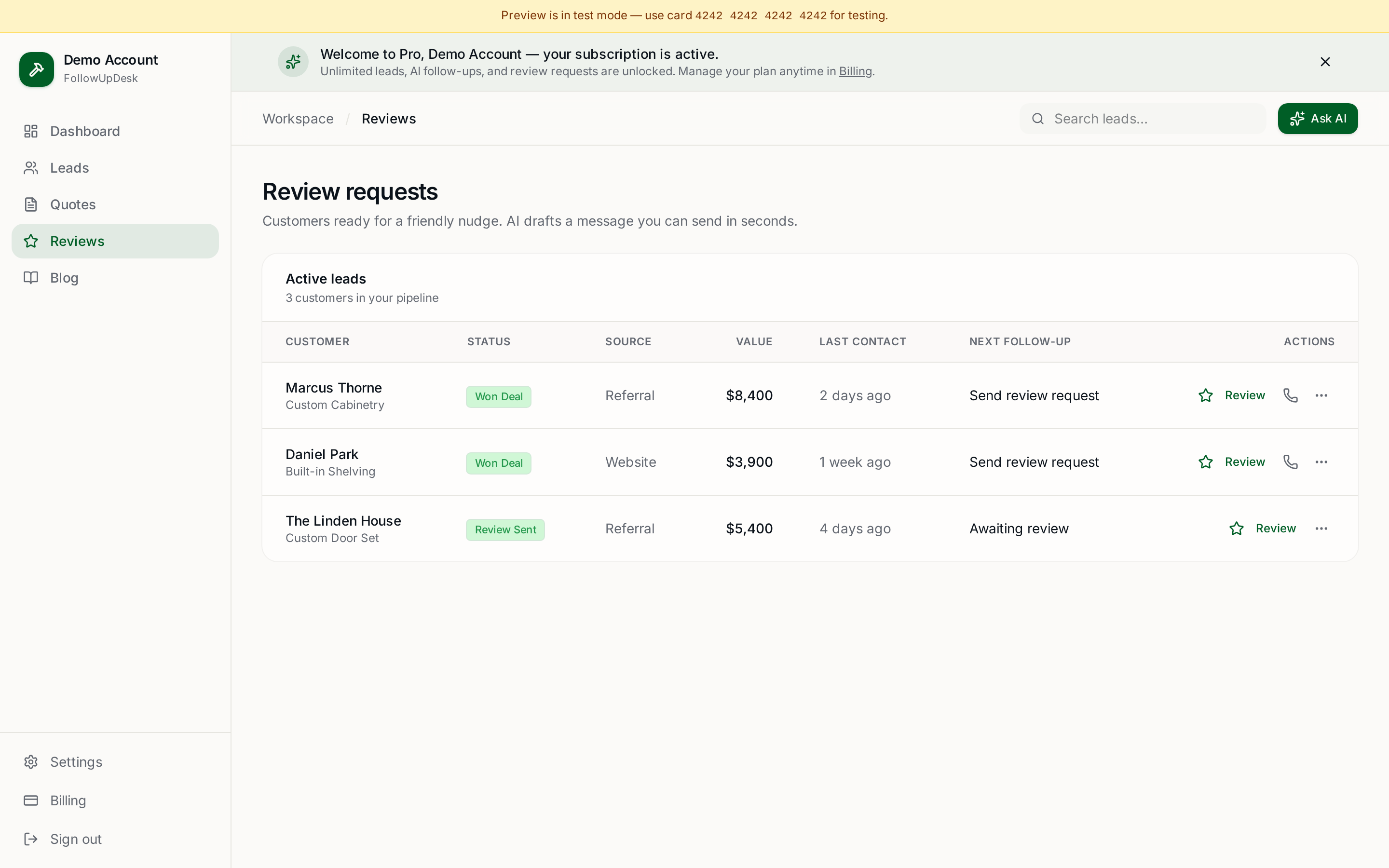
FollowUpDesk tracks every agreement, tune-up due date, and renewal with automatic reminders so plans do not quietly lapse. $29/month flat, unlimited users.
How to sell more agreements
Offer it at the end of every repair call, while the customer is already thinking about reliability.
Show the math: two tune-ups plus the repair discount typically exceeds the plan price on a single service call.
Ask the technician to present it, not the office. Trust is highest at the equipment.
See it in FollowUpDesk
Get started — $29/mo →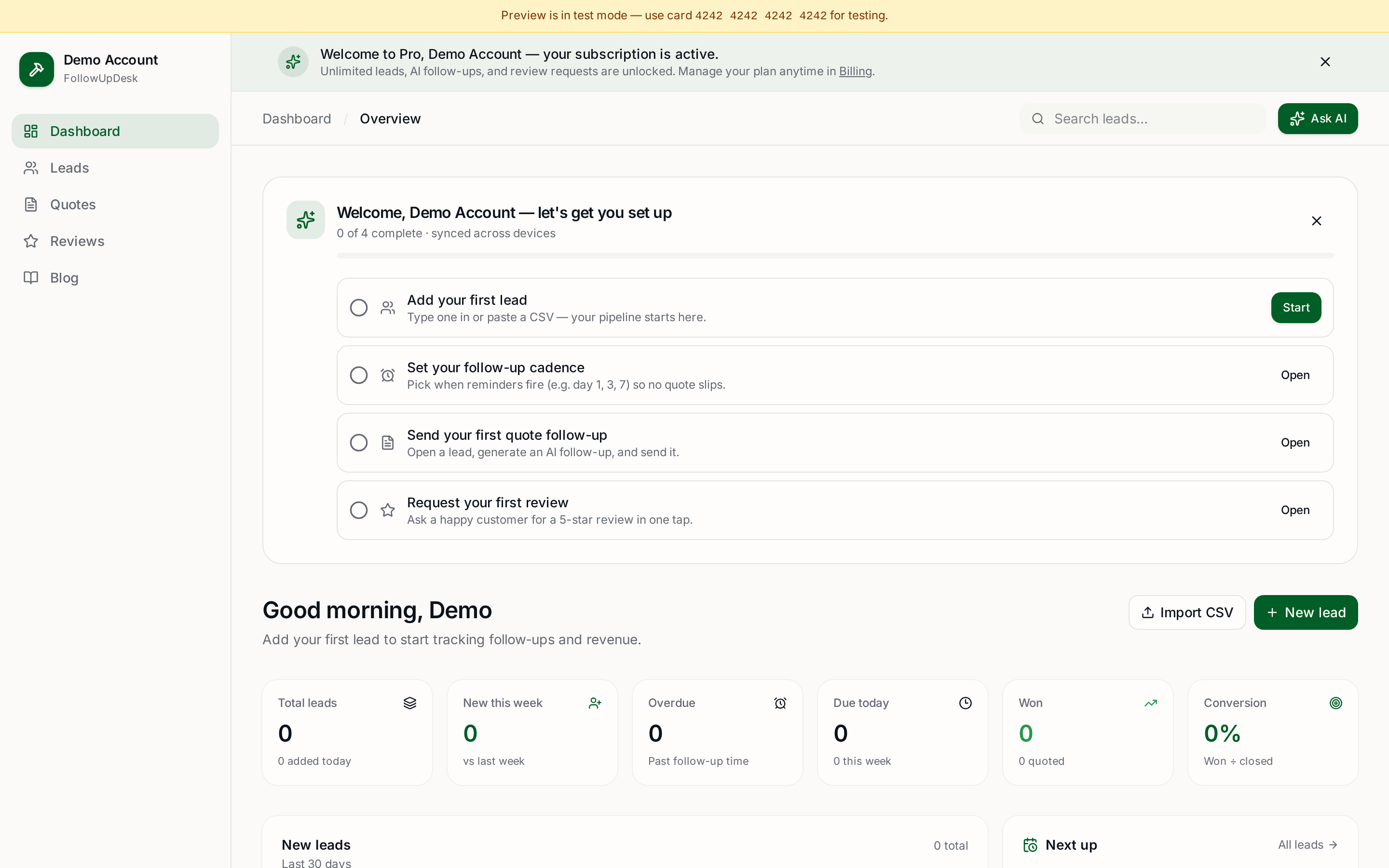
Skip the manual work — these are free, no card required
Frequently asked questions
What should an HVAC maintenance agreement include?▾
Covered equipment, a 12-month term with renewal terms, the number and content of seasonal visits, member benefits like priority scheduling and repair discounts, pricing per system, exclusions, and payment and cancellation terms.
How much should an HVAC maintenance plan cost?▾
Residential plans commonly run monthly per system with a reduced rate for additional units; price it so two tune-ups plus the repair discount clearly exceed the plan cost for the customer.
How many visits should a maintenance plan include?▾
Two per year is standard — a cooling tune-up in spring and a heating tune-up in fall — with the checklist for each written into the agreement.
How do you keep maintenance agreements from lapsing?▾
Reminders 30 days before each seasonal visit, a renewal notice 45 days before term end, and card-expiry alerts. Automating those three touches is what protects retention.
When is the best time to sell a maintenance agreement?▾
At the end of a repair call, presented by the technician while the customer is focused on reliability and the cost of breakdowns.
Get the full FollowUpDesk CRM — $29/month
One pipeline for every lead, AI follow-ups for every quote, review requests on autopilot. Cancel in one click.
Free tools require no card · Pro is $29/month, cancel anytime