How to Follow Up After Sending a Quote Without Sounding Pushy
Learn when to follow up after sending a quote, what to say, and how small businesses can track open quotes without losing leads.
Sending a quote is not the end of the sale.
For many small businesses, it is the point where the sale quietly starts disappearing.
A customer asks for a price. You send the quote. They say nothing. A day passes. Then three. Then a week. You are not sure whether to follow up because you do not want to seem annoying. Meanwhile, the customer may be comparing other options, waiting for a reminder, confused by the quote, busy, or simply distracted.
Most lost quotes do not feel dramatic.
They just go silent.
That is why quote follow-up matters.
A good follow-up is not pushy. It is helpful. It reminds the customer that you are available, gives them a chance to ask questions, and keeps the job from getting lost in texts, emails, inboxes, and memory.
This guide explains how to follow up after sending a quote, when to do it, what to say, and how to track open quotes so small businesses stop losing money in forgotten follow-ups.
Why Following Up After a Quote Matters
Many small business owners assume that if a customer wants the service, they will reply.
Sometimes that is true.
But often, customers are busy. They request multiple quotes. They forget to respond. They need to check with a partner, manager, landlord, spouse, or team member. They may have questions but feel awkward asking. They may like your quote but need a nudge.
A follow-up gives them an easy way back into the conversation.
For quote-based businesses, follow-up is especially important because every open quote represents potential revenue.
This matters for cleaning companies, landscapers, contractors, roofers, car detailers, photographers, salons, tattoo studios, wedding vendors, repair businesses, consultants, and local service businesses.
If you send quotes but do not track follow-ups, you may already have money waiting in old conversations.
The problem is not always getting more leads.
Sometimes the faster win is following up with the leads you already have.
When Should You Follow Up After Sending a Quote?
A simple follow-up schedule works best.
Here is a practical timeline:
Same day — Send the quote clearly and confirm they received it.
24 to 48 hours later — Send a short, helpful follow-up.
3 to 5 days later — Ask if they have questions or want to move forward.
7 days later — Send a final friendly check-in.
2 to 4 weeks later — Follow up only if the quote is still relevant or seasonal.
You do not need to chase forever.
The goal is to stay helpful without becoming irritating.
For many small businesses, the first follow-up after 24 to 48 hours is the most important. It catches customers while the request is still fresh.
The Best Follow-Up Email After Sending a Quote
Here is a simple template you can use.
Quote Follow-Up Email Template
Subject: Following up on your quote
Hi [Name], I just wanted to follow up on the quote I sent over for [service/project]. Please let me know if you have any questions, would like anything adjusted, or want to go ahead with the next step. Happy to help. Best, [Your Name]
Why this works: This message is short, polite, and not desperate. It does not pressure the customer. It gives them three easy ways to reply: ask a question, request a change, or move forward. That is what a good follow-up does. It makes replying easy.
A Warmer Quote Follow-Up Template
Use this if you want the message to feel more personal.
Subject: Quick follow-up on your quote
Hi [Name], I hope you are doing well. I wanted to quickly check in on the quote I sent for [service/project]. I know things get busy, so I just wanted to see if you had any questions or if there is anything you would like me to clarify. If you would like to move forward, I would be happy to help with the next step. Best, [Your Name]
A Short Text Message Follow-Up
For many local businesses, text messages or WhatsApp messages work better than email.
Use this: Hi [Name], just following up on the quote I sent for [service]. Let me know if you have any questions or would like to go ahead.
That is enough.
Do not overthink it.
Follow-Up After Sending a Quote for a Cleaning Business
Cleaning businesses often send quotes after a customer asks about home cleaning, office cleaning, move-out cleaning, deep cleaning, Airbnb cleaning, or recurring service.
Subject: Following up on your cleaning quote
Hi [Name], I wanted to follow up on the cleaning quote I sent over for [home/office/property/service]. Please let me know if you have any questions about the price, schedule, or what is included. If you would like to book, I would be happy to confirm the next available time. Best, [Your Name]
Follow-Up After Sending a Quote for Landscaping
Landscaping and gardening quotes can go quiet because customers may be comparing prices, checking budgets, or waiting for seasonal timing.
Subject: Following up on your landscaping quote
Hi [Name], I wanted to follow up on the quote I sent for [landscaping/garden maintenance/project]. Please let me know if you have any questions or if you would like to adjust anything in the scope. If you are ready to move forward, I can help confirm the next step. Best, [Your Name]
Follow-Up After Sending a Quote for Contractors
Contractor quotes often involve higher-value work, so follow-up should be professional and clear.
Subject: Following up on your project quote
Hi [Name], I wanted to check in on the quote I sent for [project/service]. I am happy to answer any questions about the scope, timeline, materials, or pricing. If you would like to make any changes, I can also update the quote. Please let me know how you would like to proceed. Best, [Your Name]
Follow-Up After Sending a Quote for Car Detailing
Car detailing customers often need a quick reminder because they may be deciding between packages.
Subject: Following up on your detailing quote
Hi [Name], just following up on the quote I sent for your [vehicle/detailing service]. Let me know if you have any questions about the package or if you would like to book a time. Best, [Your Name]
Follow-Up After Sending a Quote for Tattoo Studios
Tattoo studios often lose inquiries in Instagram DMs, email threads, and text messages. Follow-up is especially important when a customer has asked about design, price, deposit, or booking availability.
Subject: Following up on your tattoo quote
Hi [Name], I wanted to follow up on the quote/details I sent for your tattoo idea. Let me know if you have any questions about the design, pricing, deposit, or booking availability. If you would like to move forward, I can help with the next step. Best, [Your Name]
Follow-Up After Sending a Quote for Wedding Vendors
Wedding vendors need a warm tone because the purchase is emotional and often time-sensitive.
Subject: Quick follow-up on your wedding quote
Hi [Name], I hope wedding planning is going well. I wanted to follow up on the quote I sent for [service/date]. Please let me know if you have any questions or if there is anything you would like adjusted. If you would like to move forward, I would be happy to help confirm the next step. Best, [Your Name]
What to Say If the Customer Has Not Replied
If the first follow-up gets no response, wait a few days and send a second message.
Second Follow-Up Template
Subject: Checking in one more time
Hi [Name], I just wanted to check in one more time about the quote for [service/project]. Are you still interested in moving forward, or would you prefer that I close this out for now? Either way is completely fine — I just wanted to make sure I did not leave you waiting. Best, [Your Name]
This is effective because it gives the customer permission to say no. Many people avoid replying because they feel awkward. This makes the response easier.
Final Follow-Up Email Template
Use this after a week or more if the customer still has not replied.
Subject: Closing the loop on your quote
Hi [Name], I wanted to follow up one last time on the quote I sent for [service/project]. Since I have not heard back, I will close this out for now. If you would like to revisit it later, feel free to reach out anytime. Thanks again, [Your Name]
This keeps the door open without chasing endlessly.
How to Follow Up Without Sounding Pushy
The difference between helpful and pushy is tone.
Helpful follow-up sounds like: Let me know if you have any questions. Happy to adjust the quote if needed. Would you like to move forward? Should I close this out for now? No problem either way.
Pushy follow-up sounds like: Why have you not responded? This offer expires today. I need an answer immediately. You should book now. I have followed up many times.
You can be direct without being aggressive. A good follow-up respects the customer’s choice while keeping the conversation open.
What to Include in a Quote Follow-Up
Every quote follow-up should include:
- The customer’s name. Personalizing the message makes it feel less automated.
- The service or project. Mention what the quote was for. Customers may have requested multiple quotes from different businesses.
- A clear reason for writing. Say you are checking in on the quote. Do not make the customer guess.
- A helpful question. Ask if they have questions, want changes, or would like to move forward.
- A simple next step. Make it easy to reply. Examples: Would you like to book a time? Would you like me to update the quote? Should I send the deposit link? Would you like to go ahead?
- A polite close. Keep the tone calm and professional.
How Many Times Should You Follow Up on a Quote?
For most small businesses, three follow-ups are enough: first follow-up after 24 to 48 hours, second follow-up after 3 to 5 days, final follow-up after about a week.
After that, move the quote to closed or inactive unless the job is high-value or seasonal.
You can always follow up later if the timing makes sense. For example: a landscaping quote before spring, a wedding vendor quote before booking season, a cleaning quote before a move-out date, a contractor quote before a planned renovation, or a car detailing quote before summer.
The key is to track the quote status so you do not rely on memory.
Why Customers Do Not Respond After a Quote
When a customer does not reply, it does not always mean they rejected you.
Common reasons include: they are comparing other quotes, they forgot, they are busy, they need approval from someone else, they are unsure about the price, they do not understand what is included, they need a different date or time, they are waiting until payday or budget approval, they feel awkward saying no, or they lost the message.
This is why a polite follow-up works. Sometimes the customer is still interested, but the conversation needs a nudge.
How to Track Open Quotes
If you send more than a few quotes per week, you need a system.
At minimum, track: customer name, contact information, service requested, quote value, date quote sent, last contacted date, next follow-up date, quote status, notes, and won or lost.
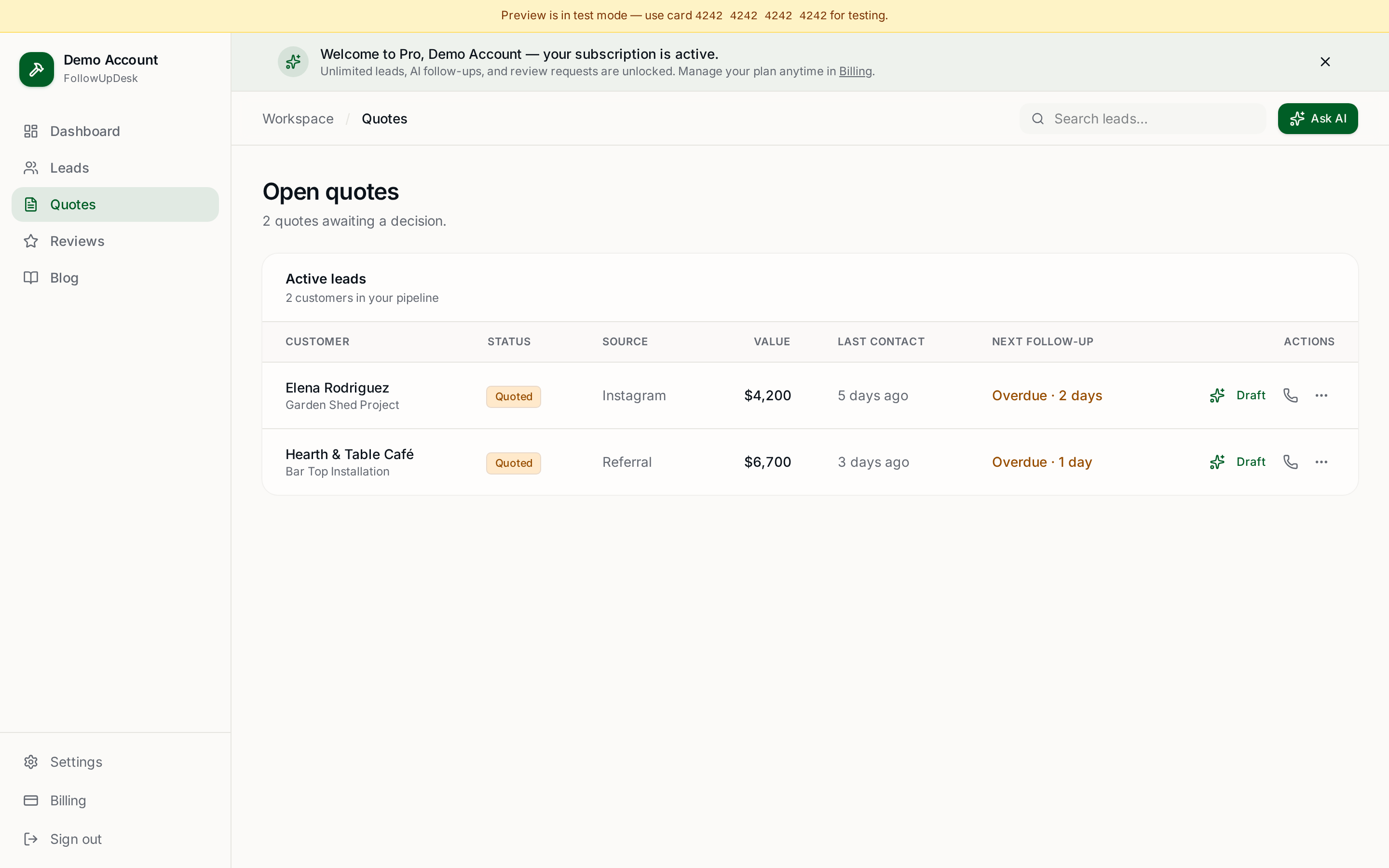
A simple quote tracker helps you answer: which quotes are still open, who needs a follow-up today, how much money is waiting on quotes, which quotes are overdue, which quotes were won, which quotes were lost, and which lead sources bring the best customers.
Without tracking, open quotes disappear into email, texts, WhatsApp, Instagram DMs, and memory.
Quote Tracking Spreadsheet Template
Here is a simple structure:
Sarah M. — Deep cleaning, $280, quote sent June 3, last contacted June 4, next follow-up June 7, status Open, notes asked about weekend availability.
Daniel R. — Garden cleanup, $450, quote sent June 5, last contacted June 6, next follow-up June 9, status Open, notes wants before end of month.
Priya S. — Event photography, $1,200, quote sent June 2, last contacted June 5, next follow-up June 10, status Waiting, notes comparing packages.
Leo T. — Car detailing, $180, quote sent June 4, last contacted June 6, next follow-up June 8, status Won, notes booked Saturday.
This is enough to start. But if you are constantly sorting, filtering, and manually checking dates, a spreadsheet may become hard to maintain.
Signs You Need a Follow-Up Dashboard
A spreadsheet works when your quote volume is small. But you may need a follow-up dashboard when: you forget to follow up with leads, you send quotes but do not track outcomes, customers ask for quotes across email, phone, Instagram, WhatsApp, and website forms, you do not know how much money is waiting on open quotes, you lose track of who needs a reply, you cannot see overdue follow-ups quickly, you want to request reviews from happy customers, or you want a simple view of won and lost revenue.
The point is not to make sales complicated. The point is to make follow-up visible.
How FollowUpDesk Helps
FollowUpDesk is a simple lead follow-up dashboard for small businesses that send quotes and need to track what happens next.
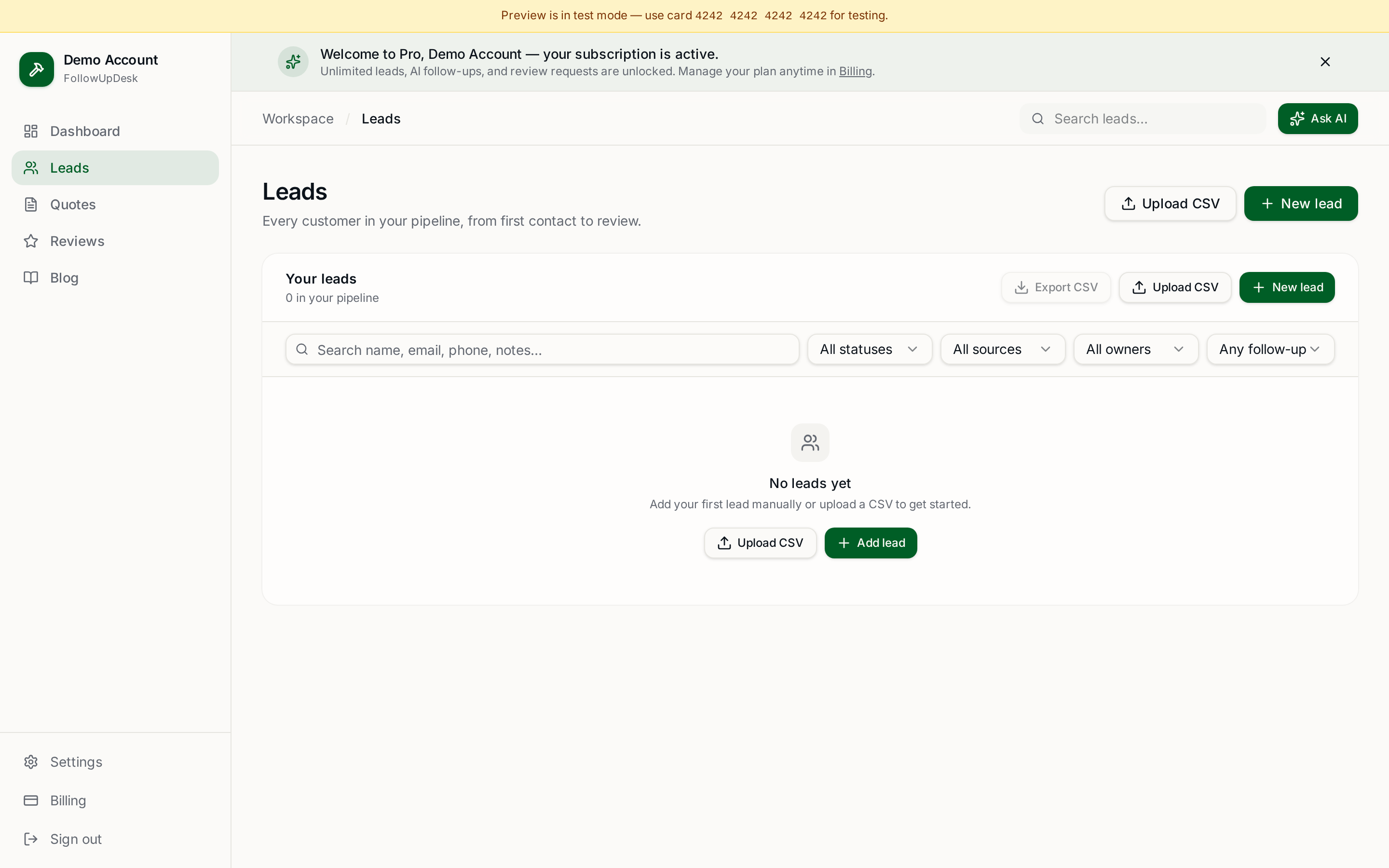
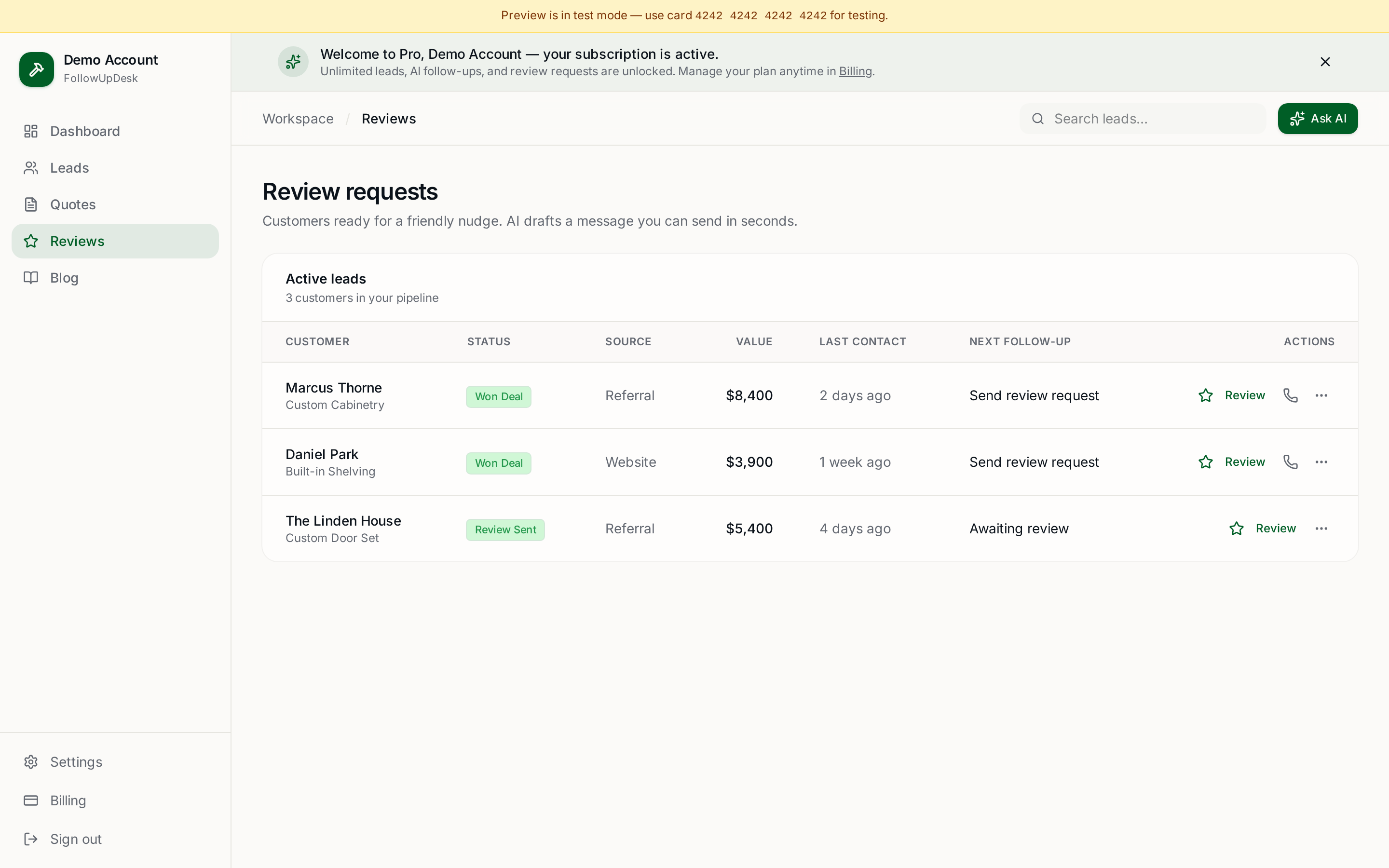
It helps you manage new leads, quotes sent, overdue follow-ups, open quote value, won revenue, review requests, customer notes, CSV uploads, and manual lead entry.
Instead of losing leads in texts, emails, sticky notes, or spreadsheets, you can see who needs attention and how much money is waiting on open quotes.
FollowUpDesk is built for small businesses that do not want a complicated CRM. Just leads, quotes, follow-ups, and reviews in one clean place.
Best Practices for Quote Follow-Up
Follow up quickly. Do not wait too long after sending a quote. A first follow-up within 24 to 48 hours keeps the conversation warm.
Keep it short. Your follow-up does not need to be long. Most customers prefer a clear, simple message.
Be helpful, not desperate. Ask if they have questions or need changes. Do not pressure them.
Track every quote. If the quote has value, track it. Do not rely on memory.
Set a next follow-up date. Every open quote should have a next follow-up date. If there is no next step, the quote will probably disappear.
Mark quotes as won or lost. This helps you understand what is actually happening in your business.
Ask for reviews after completed jobs. Once a customer is happy, ask for a review while the experience is fresh. Reviews help future leads trust you faster.
Quote Follow-Up FAQ
How do you politely follow up after sending a quote? Politely follow up by thanking the customer, mentioning the quote, asking if they have questions, and offering to help with the next step. Keep the message short and helpful.
How long should I wait to follow up after sending a quote? Many small businesses follow up 24 to 48 hours after sending a quote. If there is no reply, follow up again after a few days and send a final check-in about a week later.
What should I say when following up on a quote? Say something simple like: I wanted to follow up on the quote I sent for [service]. Please let me know if you have any questions or would like to move forward.
Is it pushy to follow up on a quote? No, it is not pushy if the follow-up is polite, helpful, and respectful. Many customers appreciate a reminder, especially if they are busy or comparing options.
How many times should I follow up on a quote? For most small businesses, two or three follow-ups are enough. After that, you can close the quote for now unless the customer replies or the project is high-value.
How do I track quote follow-ups? You can track quote follow-ups in a spreadsheet or follow-up dashboard. Track customer name, service, quote value, quote sent date, last contacted date, next follow-up date, status, and notes.
Why do customers not respond after a quote? Customers may not respond because they are busy, comparing options, unsure about price, waiting for approval, or simply forgot. A polite follow-up gives them an easy way to restart the conversation.
What is the best way to stop losing leads? The best way to stop losing leads is to track every inquiry, quote, last contact date, and next follow-up date in one place. Review overdue follow-ups regularly so customers do not get forgotten.
Final Thought
Following up after a quote is not annoying when it is done well.
It is part of good service.
A customer asked for information. You sent it. A thoughtful follow-up helps them decide, ask questions, or move forward.
The small businesses that win more jobs are not always the ones with the most leads.
Often, they are the ones that follow up better.
Track your quotes. Set follow-up dates. Keep messages simple. Close the loop when someone is no longer interested. Ask happy customers for reviews.
Because every forgotten quote is not just an old message.
It may be money waiting for one more follow-up.
See it in FollowUpDesk
Get started — $29/mo →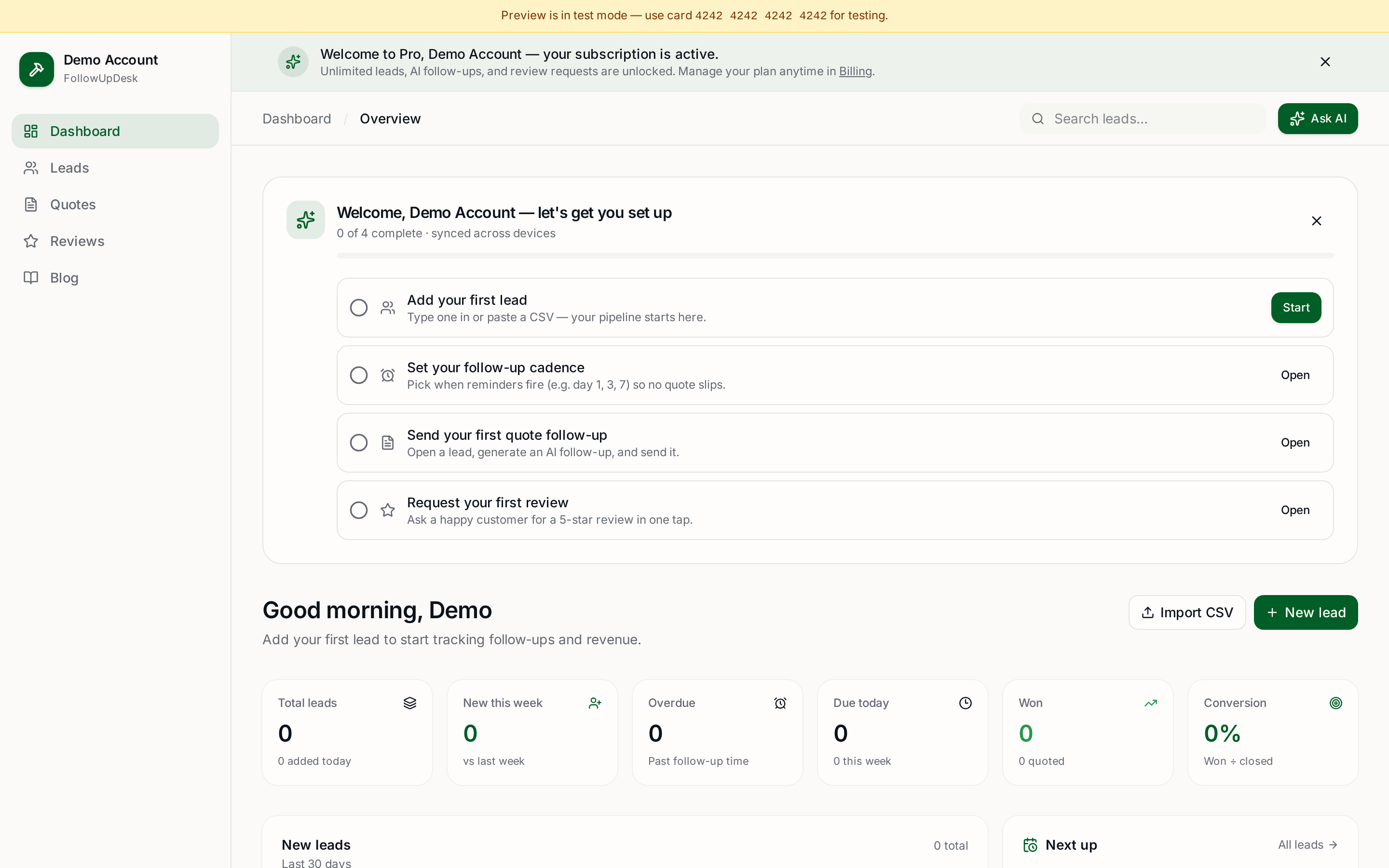
Skip the manual work — these are free, no card required
Get the full FollowUpDesk CRM — $29/month
One pipeline for every lead, AI follow-ups for every quote, review requests on autopilot. Cancel in one click.
Free tools require no card · Pro is $29/month, cancel anytime