Electrician invoice template (free) that gets paid on time
A complete electrician invoice template with license, permit, and materials lines — plus the reminder cadence that clears your receivables.
Electrical work is high-trust, high-liability work, and the invoice should look like it. A clean, itemized invoice with your license number and permit references gets paid faster and disputed less.
The electrician invoice template
Header: business name, electrical license number, insurance carrier, address, phone, email.
Invoice meta: invoice number, issue date, due date, purchase-order number for commercial clients, and job address.
Scope: a plain-language description — 'Installed 200A panel upgrade, 30 circuits relabeled, new grounding electrode, permit and inspection included.'
Labor: hours by technician type (journeyman, apprentice) with rates, or a flat-rate line if you price by task.
Materials: panel, breakers, wire by gauge and footage, boxes, devices, conduit — grouped, not exhaustively itemized.
Permits and inspection fees as their own line so customers see they are pass-through.
Totals: subtotal, tax, deposit credit, balance due, and the due date repeated.
Terms: payment methods and link, late fee, and warranty (commonly 1 year on labor).
Residential vs commercial invoicing
Residential: due on receipt, card or payment link, one-page invoice. Keep it short and readable.
Commercial: net 30, PO number required, sometimes AIA-style progress billing. Send to accounts payable, not the site contact, or it will sit in someone's inbox for a month.
Getting paid faster
Invoice the same day. Every day of lag adds days to payment.
Include a payment link on the invoice itself. Friction is the enemy of cash flow.
Take a deposit on anything over a day of work — 30% to 40% covers material exposure.
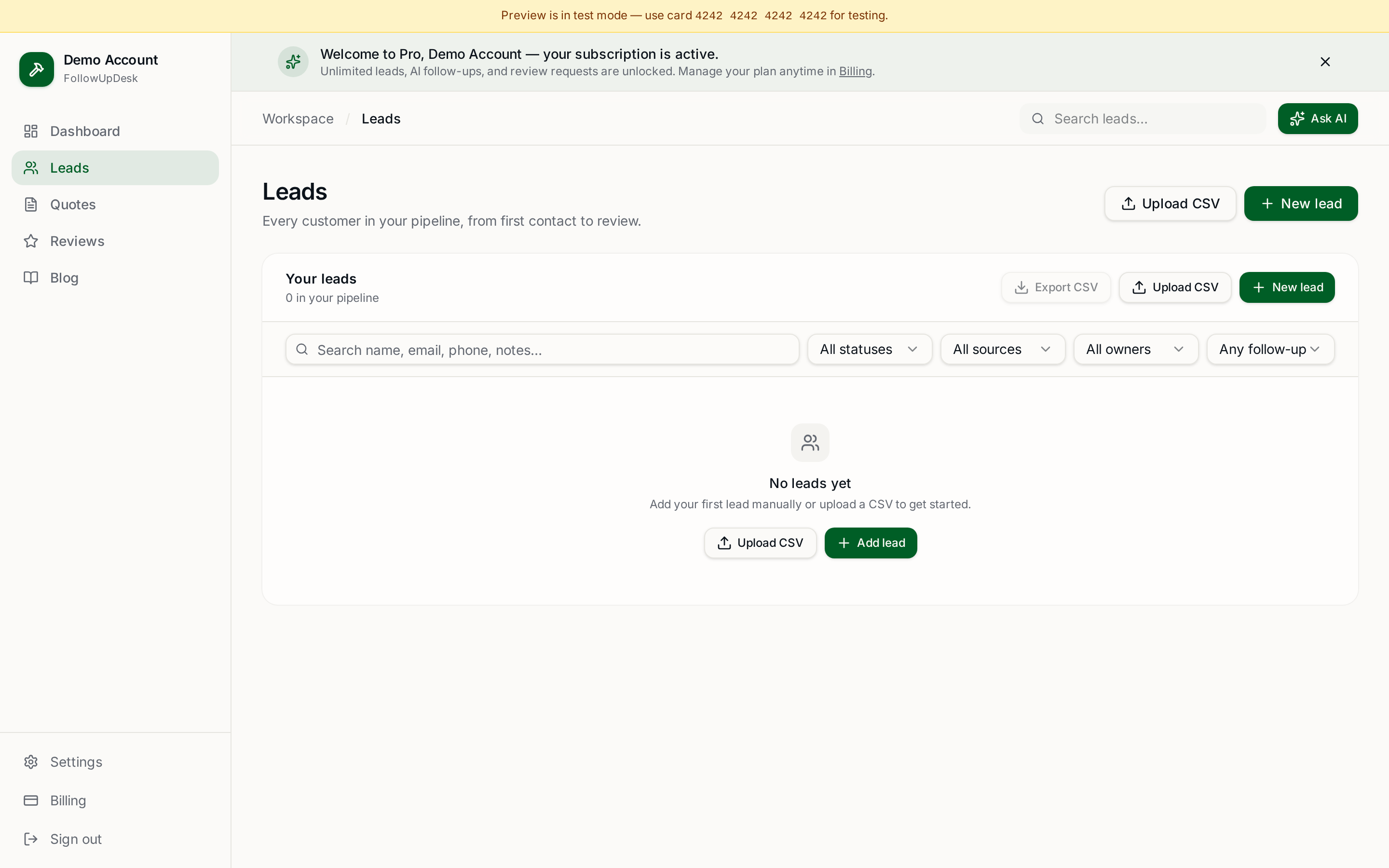
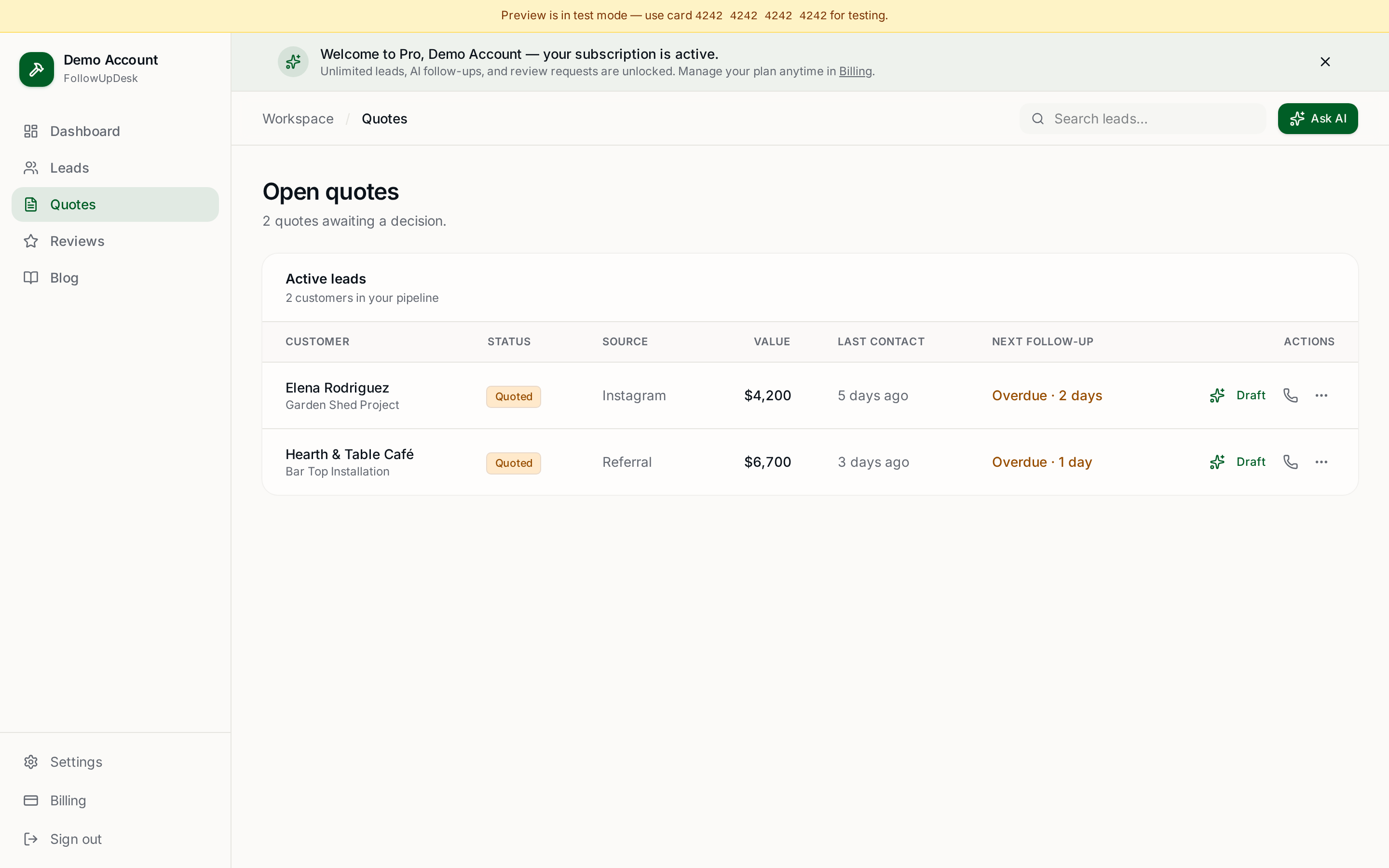
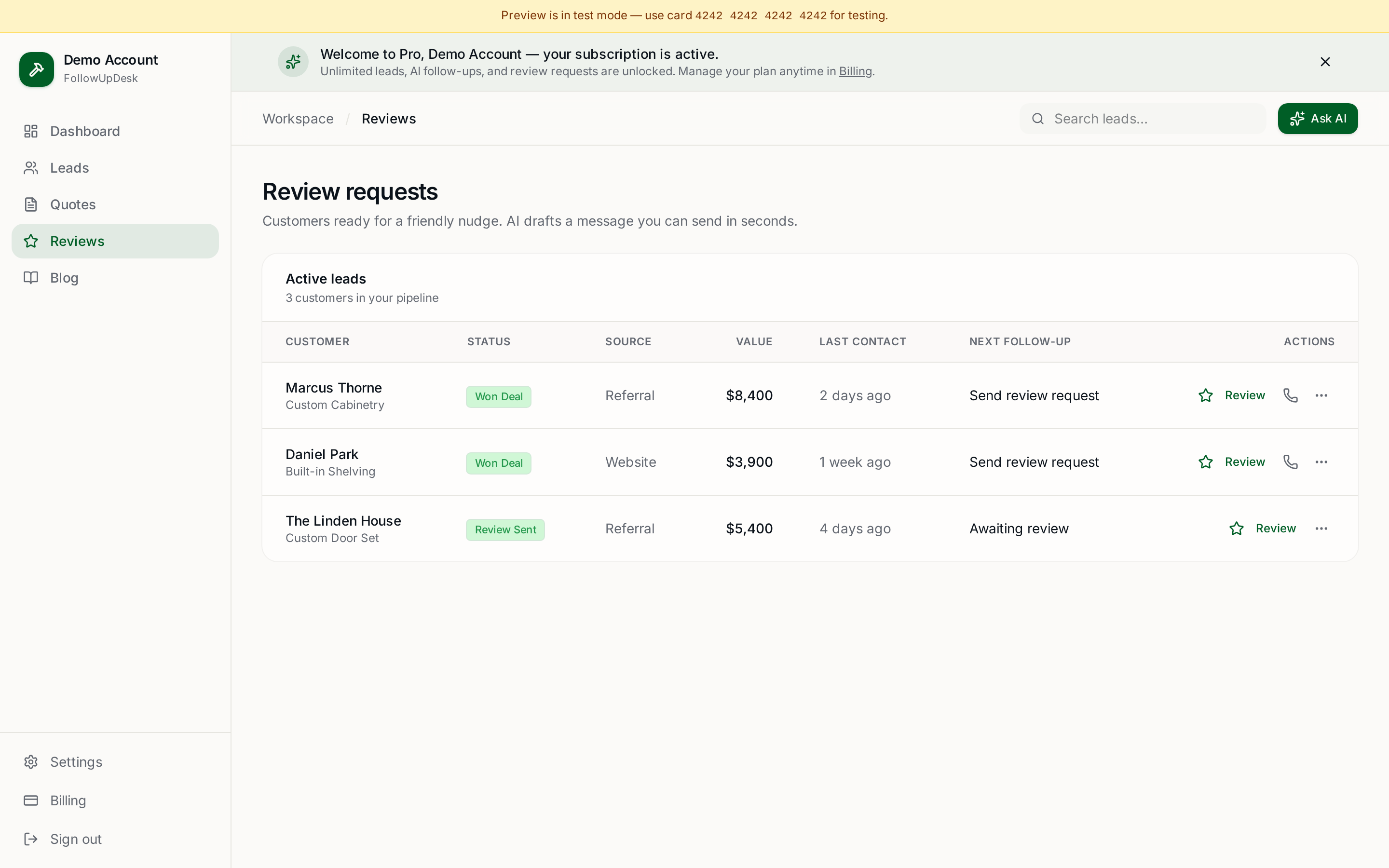
Run a reminder cadence: day 3 text, day 7 email, day 14 phone call, day 21 late fee notice. FollowUpDesk keeps that schedule for every open invoice and quote automatically at $29/month flat for unlimited users.
What causes disputed electrical invoices
Change orders that were never documented. Text confirmation counts — get a 'yes' in writing before the extra work starts.
Material markup that appears out of nowhere. State your markup policy up front.
No reference back to the estimate. Link the two so the numbers reconcile.
See it in FollowUpDesk
Get started — $29/mo →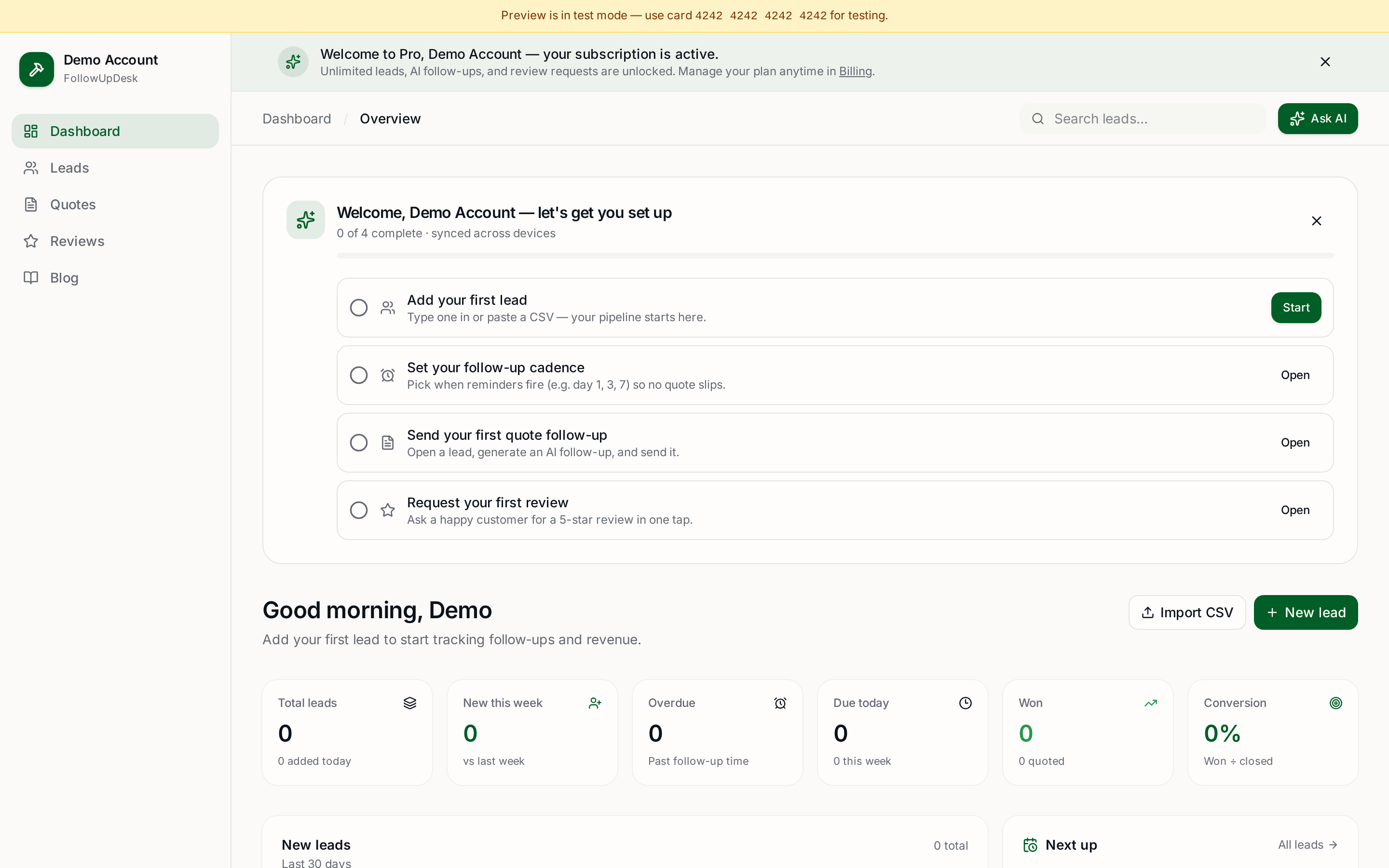
Skip the manual work — these are free, no card required
Frequently asked questions
What should an electrician invoice include?▾
Business and license details, invoice number, issue and due dates, job address, a plain-language scope, itemized labor and materials, permit and inspection fees, tax, deposit credit, balance due, payment methods, and warranty terms.
What payment terms should electricians use?▾
Due on receipt or net 7 for residential, and net 30 with a PO number for commercial clients. Take a 30-40% deposit on multi-day jobs.
How do you handle change orders on electrical work?▾
Document them before the work happens — even a text message confirming scope and price protects you and prevents invoice disputes later.
How do I follow up on unpaid electrical invoices?▾
Text at day 3, email at day 7, phone call at day 14, and a formal late-fee notice at day 21. Automating the sequence means it happens consistently.
Should permit fees be a separate invoice line?▾
Yes — showing permits and inspection fees as pass-through costs prevents customers from reading them as padding.
Get the full FollowUpDesk CRM — $29/month
One pipeline for every lead, AI follow-ups for every quote, review requests on autopilot. Cancel in one click.
Free tools require no card · Pro is $29/month, cancel anytime